
How to automate marketing processes to sell more (and better)
If your marketing team is still sending newsletters manually, assigning leads to sales by hand, and analyzing data across countless Excel spreadsheets… there’s some bad news 😅
You’re wasting time, opportunities, and revenue.
The good news?
There’s a solution already widely adopted by top-performing companies: Marketing Automation.
In this article, we’ll explore what Marketing Automation is, what it’s used for, and why today it has become an essential tool for companies, including in the B2B space.
What is Marketing Automation
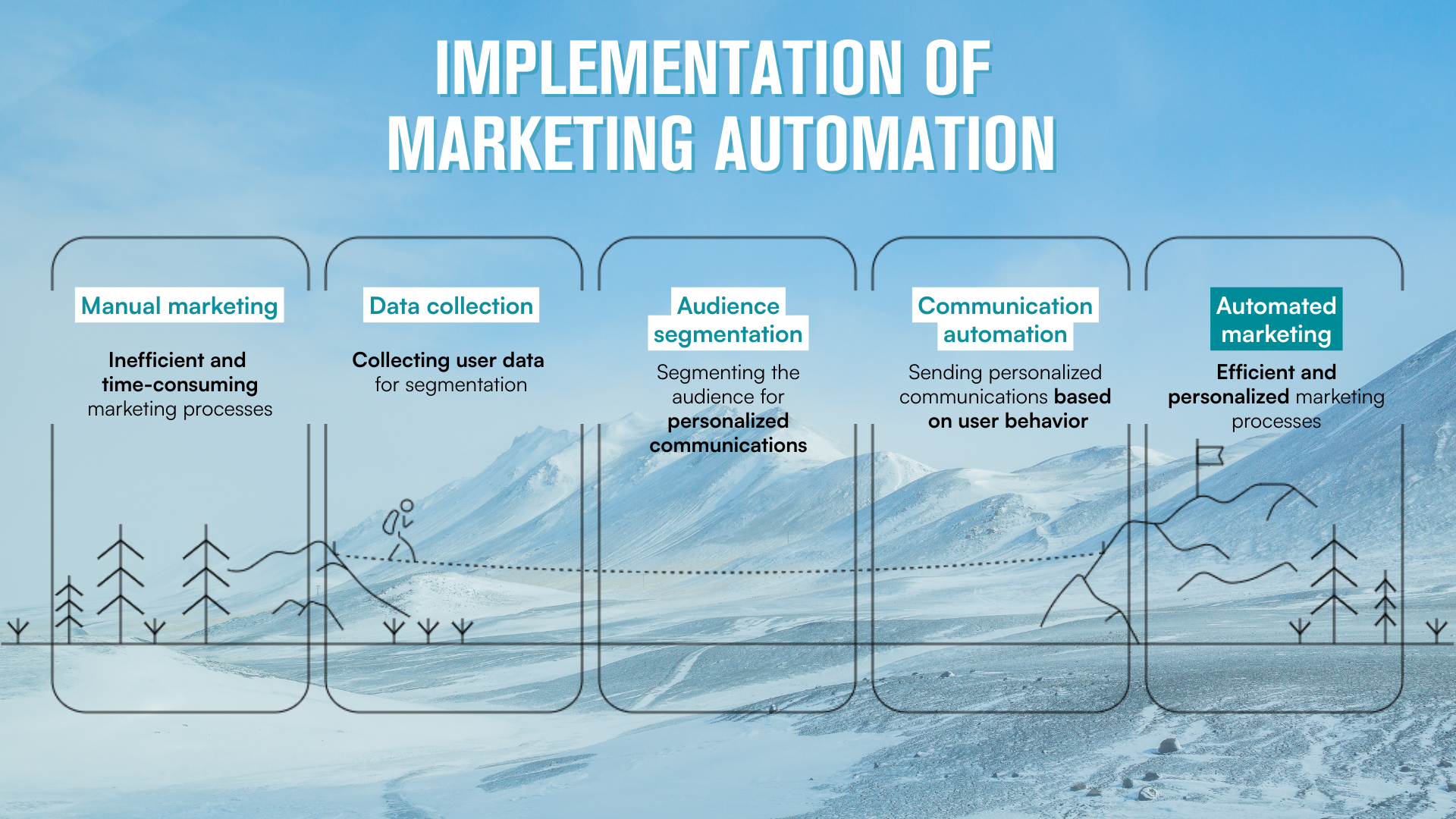
Marketing Automation is the combination of processes, strategies, and technologies that allow companies to automate repetitive marketing activities while simultaneously personalizing communication based on user behavior.
In practice, thanks to a marketing automation platform, you can:
- collect user data;
- segment your audience;
- send personalized communications;
- trigger automated actions based on specific events;
- measure performance accurately.
A cosa serve la Marketing Automation
Marketing Automation isn’t “just” about sending automated emails.
It’s about building relationships, qualifying leads, and supporting the sales team.
Generating and qualifying leads
One of the main goals of marketing automation is lead nurturing: guiding users through the sales funnel with relevant content.
Example:
A user downloads an ebook
Receives a series of educational emails
Visits key pages on the website
Is automatically classified as a qualified lead
At that point, the sales team receives a contact that’s ready to be worked.
Personalizing communication at scale
With marketing automation, you can send personalized messages to thousands of contacts, based on:
- demographic data;
- interests;
- website behavior;
- purchase history.
The result? More relevant messages, higher open rates, and fewer unnecessary communications.
Allineare marketing e vendite
One of the most common issues in companies is the lack of alignment between marketing and sales.
Marketing automation, especially when integrated with a CRM, allows you to:
- share up-to-date lead data;
- track all interactions;
- understand when a contact is ready to be approached.
This means fewer internal frictions and more deals closed.
Optimizing time and resources
Automating repetitive activities allows marketing teams to:
- save time;
- reduce manual errors;
- focus on strategic activities.
According to various industry studies, companies that adopt marketing automation achieve:
- reduced errors and costs, with up to +30% sales growth in eCommerce and B2B;
- higher lead conversion rates, with an average 45% annual ROI;
- savings of over 120 hours per week on repetitive tasks such as follow-ups and CRM updates.
Which activities can be automated?
With a marketing automation platform, you can automate:
- email marketing;
- lead scoring;
- multichannel campaigns;
- customer onboarding;
- cart recovery (also in B2B eCommerce);
- post-sale follow-up.
All managed through intelligent workflows based on rules and triggers.
Marketing Automation and CRM: a key combination
Marketing automation works best when integrated with a CRM.
Together, CRM and Marketing Automation make it possible to:
- have a single, unified view of the customer;
- track the entire customer journey;
- improve the user experience;
- increase customer lifetime value.
Marketing Automation is not a trend: it’s a strategic tool for structured growth.
It helps you:
- improve customer relationships;
- increase team efficiency;
- support the sales department;
- generate more value from data.
If you want to understand how to apply it concretely in your company, the first step is to talk with us.
Want to discover how to implement Marketing Automation in your business?
Contact us and we’ll build a strategy tailored to your business goals.