
From analysis to adoption, through training and ongoing monitoring: everything you need for a CRM project that really works.
In the B2B world, effective customer relationship management is no longer optional: it’s a necessity.
A well-implemented CRM system can transform productivity, bring order where chaos reigns, and give sales teams the boost they’ve been asking for.
However (sorry to say it), a CRM doesn’t magically install itself while you’re sipping a coffee.
It takes method, patience, and above all, proper design.
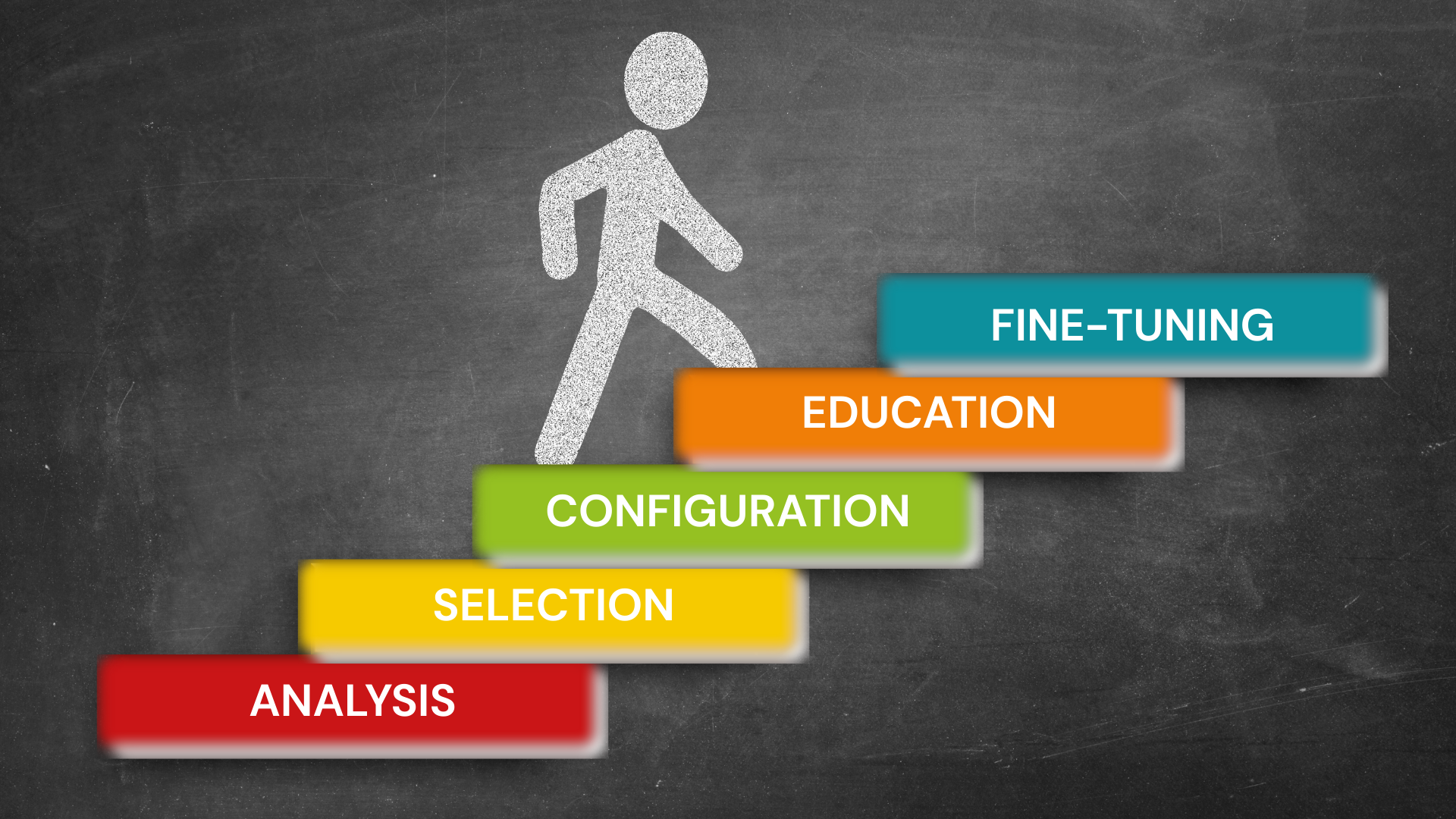
Here are the 5 phases we believe are crucial to ensure a successful CRM implementation in a B2B context.
1. Needs analysis and goal definition
Before starting a CRM project, it’s essential to understand what’s really happening inside the company: existing processes, customer touchpoints, the needs of the involved teams, and, most importantly, expectations.
At this stage, you need to be a bit of a project manager, a bit of a consultant… and a bit of a psychologist. Doubts, critical issues, unspoken wishes, and the occasional “this never works” will inevitably surface.
Some key questions to ask include:
- what customer information do we want to collect?
- which sales and marketing processes do we want to optimize?
- which KPIs will measure the success of the CRM?
A thorough analysis helps avoid costly implementations, unused tools… and frustration among CRM users.
2. Choosing the right CRM platform
Not all CRM solutions are the same, especially in B2B. Key aspects to consider include:
- scalability: the system must grow with the company;
- integrations: with ERP systems, marketing automation tools, customer support platforms;
- user experience: ease of use is critical for team adoption.
Demos, case studies, and analysis of past failures are extremely helpful in understanding what not to do. Trust us.
3. Configuration and customization
An effective CRM isn’t just “installed”: it must be tailored to the company’s processes.
Key elements to focus on:
- properly structured sales pipelines;
- custom fields to collect truly relevant data;
- smart automations that remove work instead of creating more.
This phase requires close collaboration between IT, sales, and marketing to ensure the system reflects real operational workflows. Otherwise, the CRM won’t be much help.
4. Team training and engagement
Even the best CRM in the world is useless if the team doesn’t use it correctly. It’s essential to:
- organize practical, tailored training sessions;
- encourage adoption through clear goals and shared KPIs;
- create an internal support channel for questions and issues.
A motivated and well-trained team is the true engine of a successful CRM project.
5. Monitoring, optimization, and continuous feedback
A CRM is not a “set it and forget it” project. You don’t install it and let it run on its own.
To maximize its value, you need to:
- monitor KPIs and collected data;
- analyze sales and marketing campaign performance;
- gather user feedback and continuously update processes and configurations.
A living CRM grows with the company, it’s not just an operational cost.
With vtenext CRM, we at WSB follow these five steps rigorously to deliver the best possible projects to our clients.
We don’t just hand over a “machine” and walk away: we design the project together with our clients, tailor it to their needs, and continue to take care of it over time.
If you’re thinking about a CRM project, you’ve now seen how we work.
Get in touch.